Global buyers are asking a practical question: what is the future of lithium battery technology? The answer depends on use, climate, cost, safety, and supply-chain access. No single chemistry will dominate every market.
Lithium iron phosphate, or LFP, is gaining attention because it offers strong thermal stability, long cycle life, and lower material costs. Nickel-rich NMC batteries still provide higher energy density for premium electric vehicles and demanding applications. Solid-state batteries may improve safety and driving range, but large-scale production remains difficult. Sodium-ion technology could serve lower-cost storage, although it is not a direct replacement for lithium in every product.
As battery scientist Dr. Jeff Dahn has said, “The lithium-ion battery is not a finished technology.” That observation matters for buyers. Battery performance is still improving through better electrode designs, silicon additives, smarter battery-management systems, and more accurate cell testing.
Details matter.
A battery can look impressive on paper yet perform poorly in winter. A factory may promise ten years of service, but real results depend on charging habits, temperature, and maintenance. Buyers should examine independent test data, warranty terms, safety certifications, production traceability, and after-sales support. These checks reveal more than a high energy-density number.
The future will probably be diversified, not simple. Some predictions will be wrong. That is worth admitting. This guide compares the most important lithium battery technologies for global buyers, focusing on measurable performance, commercial readiness, and practical value rather than marketing claims.
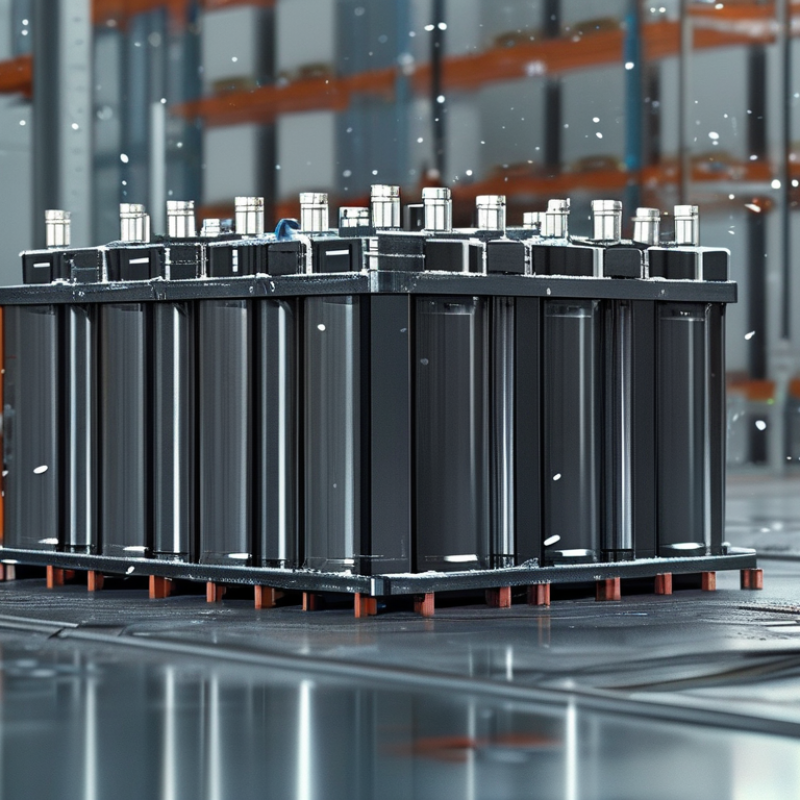
Lithium battery technology in 2026 is shaped by chemistry, safety, durability, and regional market needs. No single design wins everywhere.
Lithium iron phosphate cells remain attractive for buses, storage systems, and commercial vehicles. They usually offer strong thermal stability and long cycle life. Nickel-rich chemistries still support higher energy density for weight-sensitive applications. However, they demand stricter thermal control and careful charging limits. A battery is more than its cells. The battery management system monitors voltage, temperature, balancing, and usable capacity. Cooling plates, insulation, connectors, and enclosure design also affect real performance. Field testing often shows lower capacity than laboratory claims. Temperature, charging habits, storage time, and load patterns change the result. That difference deserves honest attention.
Tips: Ask for cycle-life data at the intended temperature and depth of discharge. Check whether testing matches your daily use. Review safety documentation, traceability, warranty conditions, and local service capability. For global buyers, compare total ownership cost rather than purchase price alone. Transport distance, import procedures, spare parts, recycling arrangements, and grid conditions can reshape the final value. Supplier audits and sample testing are useful, but they are not perfect. Even experienced buyers can overlook software compatibility or replacement timing. Leave room for uncertainty, especially when forecasts change quickly.
2026 Best Lithium Battery Technology for Global Buyers?
For global buyers, chemistry should follow duty cycle, climate, and safety requirements. The IEA’s Global EV Outlook 2025 reports that LFP batteries approached half of the global electric-car battery market in 2024. LFP offers strong thermal stability, long cycle life, and lower material costs. It suits buses, delivery fleets, and stationary storage. It is less energy-dense than NMC, however. That requires larger, heavier packs.
NMC and NCA chemistries provide higher energy density for long-range vehicles and weight-sensitive equipment. Their performance can decline faster under heat and aggressive charging. Careful thermal management is essential. LTO chemistry supports exceptional cycle life and rapid charging, but its low energy density increases system size. Fast charging helps. Cost remains difficult.
BloombergNEF’s 2024 Battery Price Survey placed the global average pack price at 115 US dollars per kilowatt-hour. It also found LFP packs were about 20% cheaper than NMC packs. Prices vary with region, contract terms, and raw-material markets. A low purchase price can hide cooling, replacement, and transport costs. In procurement reviews, buyers should request tested cycle-life data at real temperatures. Laboratory figures can look impressive. Field conditions are less polite.
The chart compares representative cell-level midpoints for major lithium battery chemistries. Energy density is shown in watt-hours per kilogram, while cycle life represents the approximate number of charge-discharge cycles before capacity commonly declines to around 80% under suitable operating conditions. Actual results vary with cell design, temperature, depth of discharge, charging rate, and battery management.
2026 Best Lithium Battery Technology for Global Buyers?
Choosing the best lithium battery in 2026 requires more than checking its energy density. Higher density can reduce vehicle weight and storage space. However, it may increase thermal management demands. Safety depends on cell chemistry, enclosure design, battery management software, and quality control. Buyers should request independent test results, abuse testing data, and clear certification records. A battery that stays cool during a summer charging cycle offers practical reassurance.
Tips: Compare usable energy, not only rated capacity. Ask for cycle-life data at realistic temperatures. Check whether warranty terms match your operating conditions. Inspect recycling plans and material sourcing policies. These details often reveal more than a polished specification sheet.
Cost should include installation, maintenance, replacement, and electricity losses. A cheaper battery may become expensive after frequent capacity decline. Lifespan also depends on charge depth, charging speed, storage temperature, and daily workload. In practical evaluations, two identical-looking systems can age differently within one year. Sustainability requires more than long service life. Buyers should examine recycled content, repair options, transport impacts, and end-of-life recovery. No technology wins every category. A spreadsheet may suggest a clear answer, yet local climate and usage habits can change the result.
The best lithium battery depends on the vehicle, duty cycle, climate, and charging access. There is no universal winner. A delivery van covering 250 kilometers daily may favor lithium iron phosphate because it offers strong cycle life and stable thermal behavior. However, its lower energy density can increase vehicle weight and reduce payload.
Passenger vehicles needing longer range often use nickel-rich lithium cells. They store more energy in limited space. Yet, they demand careful cooling, charging controls, and safety validation. In cold regions, performance can fall sharply without battery heating. Lithium titanate supports very fast charging and frequent cycling, but its higher cost and lower energy density limit wider use.
Stationary storage follows a different logic. A solar site may need lithium iron phosphate modules that cycle every day for ten years. A factory handling sudden power peaks may prioritize high discharge rates and thermal monitoring. Sodium-ion systems could suit some low-cost applications, though they are not lithium technology and remain less established globally. Industrial buyers should examine usable capacity, warranty conditions, fire protection, maintenance access, and end-of-life plans.
A spreadsheet can mislead. Real decisions need temperature tests, load profiles, and independent certification records. I would request sample data from the actual operating environment, not only laboratory results. The cheapest battery may become expensive after capacity fades, downtime rises, or cooling demands grow. Specification mistakes still happen, especially when buyers compare nominal capacity instead of delivered energy.
2026 Best Lithium Battery Technology for Global Buyers?
Global buying decisions now depend on more than energy density. Buyers should verify safety testing, transport documentation, and installation requirements before comparing prices. Recognized standards, such as IEC 62619 and UN 38.3, can clarify test coverage, but certificates need careful review. Traceability matters. Ask for cell-level records, production dates, and batch information. A supplier should explain thermal protection, charging limits, and expected cycle life in practical terms. Marketing claims often sound stronger than laboratory evidence.
Tips: Request a complete technical file, including test reports, warranty conditions, maintenance procedures, and recycling guidance. Check whether local technicians can replace modules safely. Confirm lead times for cells, control systems, fuses, and communication parts. One missing component can delay a project for weeks. Plans change. Keep written records of every technical promise.
Supply-chain resilience is becoming a core purchasing factor. Consider production capacity, shipping routes, customs requirements, and backup sources for critical materials. Regional service support can reduce downtime during seasonal demand. Future-ready systems should support software updates, battery monitoring, modular repairs, and changing grid requirements. Interoperability also matters when equipment from different suppliers must communicate. Still, no design is future-proof. A cheaper battery may perform well today, yet become difficult to service later. Buyers should test real operating conditions, including cold mornings, high humidity, uneven charging, and limited ventilation. That practical evidence is often more valuable than a polished brochure.
| Technology / Chemistry | Typical Energy Density | Safety and Thermal Stability | Cycle-Life Potential | Relative Material-Supply Exposure | Best-Fit Applications | 2026 Commercial Readiness | Key Buying Considerations |
|---|---|---|---|---|---|---|---|
| Lithium Iron Phosphate (LFP) | Approximately 90–180 Wh/kg at cell level, depending on cell design and production maturity | Generally higher thermal stability than nickel-rich lithium-ion chemistries; still requires battery-management and abuse-protection systems | Often about 2,000–6,000 cycles under suitable operating conditions; actual life depends on depth of discharge, temperature, charging rate, and controls | Lower exposure to nickel and cobalt; dependent on lithium, phosphate, iron, graphite, electrolyte, and processing capacity | Stationary storage, commercial vehicles, buses, entry-level electric vehicles, marine systems, and backup power | High | Strong option where safety, service life, and cost stability matter more than maximum pack-level range or minimum weight |
| Nickel-Manganese-Cobalt (NMC) | Approximately 150–280 Wh/kg at cell level, depending on nickel content, format, and design | Higher energy density than LFP, but nickel-rich cells require careful thermal management, current control, mechanical protection, and fire-safety engineering | Commonly about 1,000–3,000 cycles under controlled conditions; high temperature and frequent fast charging can accelerate degradation | Greater exposure to nickel, lithium, manganese, graphite, and—in some formulations—cobalt refining and geopolitical price volatility | Passenger electric vehicles, electric motorcycles, aviation-support equipment, robotics, and weight-sensitive industrial systems | High | Best suited to applications that prioritize range and compact packaging; verify thermal propagation testing and responsible-material documentation |
| Lithium Titanate (LTO) | Approximately 50–90 Wh/kg at cell level | Strong resistance to lithium plating and good low-temperature charging capability when correctly engineered | Frequently rated above 10,000 cycles; ratings vary with operating window, temperature, and charge-discharge power | Uses lithium and titanium-based active material; higher material cost and lower energy density can affect total-system economics | High-power transit, fast-charge fleets, grid support, industrial equipment, and applications requiring very long service life | Established but specialized | Consider when rapid charging, low-temperature operation, and cycle life justify the larger and potentially more expensive battery pack |
| Lithium Manganese Oxide (LMO) | Approximately 90–150 Wh/kg at cell level | Good power capability and moderate thermal stability; blended chemistries are often used to balance life and energy density | Often about 500–2,000 cycles, depending strongly on temperature, charging profile, and cell design | Lower cobalt dependence than some NMC formulations; still exposed to lithium, manganese, graphite, and electrolyte supply conditions | Power tools, medical equipment, hybrid systems, and selected mobility products | Mature, declining share in some segments | Evaluate carefully against newer LFP or blended chemistries when long cycle life and low total cost of ownership are priorities |
| Lithium-Nickel-Manganese-Aluminum Oxide (NMxA) | Typically positioned between high-energy NMC variants and lower-energy LFP; exact values depend on formulation and cell architecture | Designed to reduce cobalt use while retaining high energy density; requires rigorous thermal, electrical, and mechanical safeguards | Product-specific; obtain validated cycle-life data at the intended temperature, state-of-charge window, and charging rate | Potentially lower cobalt exposure than conventional NMC; remains sensitive to nickel, lithium, aluminum, graphite, and refining availability | Range-focused mobility and applications requiring a balance between energy density and reduced cobalt intensity | Commercially emerging | Require independent validation of production consistency, thermal propagation performance, warranty terms, and long-term material availability |
| Semi-Solid-State Lithium-Ion | Potentially above conventional lithium-ion designs, but published values vary widely by electrode loading, packaging, and test method | Reduced liquid-electrolyte content may lower some leakage and flammability risks; it does not eliminate thermal runaway or the need for protection systems | Data remains application-specific; buyers should request third-party cycle testing and calendar-life results | May use similar lithium, nickel, manganese, graphite, separator, and current-collector inputs as advanced lithium-ion cells; manufacturing scale is a key risk | Premium mobility, aerospace-adjacent systems, robotics, and weight-sensitive early-adopter projects | Early commercial | Assess production yield, repairability, replacement-cell availability, certification status, and whether performance claims are based on cell or pack measurements |
Lithium iron phosphate can suit vans traveling about 250 kilometers daily. It offers long cycle life and stable thermal behavior. However, it may weigh more and reduce payload. There is no universal winner.
Nickel-rich cells store more energy in limited space. That can support longer driving ranges. They require careful cooling, charging controls, and safety validation. Cold changes everything. Battery heating may be necessary in winter regions.
Lithium titanate supports very fast charging and frequent cycling. It may suit vehicles or equipment with short charging intervals. Its higher cost and lower energy density limit broader use. The trade-off remains significant.
Daily solar storage often benefits from long cycle life and stable operation. Usable capacity matters more than the printed nominal capacity. Buyers should review warranty terms, fire protection, maintenance access, and end-of-life plans. Ten years sounds clear, but actual conditions can change that result.
Factories should examine discharge rates, thermal monitoring, and load profiles. A battery facing sharp power demands needs suitable control equipment. High humidity and limited ventilation may affect performance. Laboratory results alone are not enough.
Request safety test reports, transport documents, installation requirements, and warranty conditions. Check production dates, batch information, and cell-level traceability. Ask how charging limits and thermal protection work in practice. Marketing language can sound better than evidence.
Review production capacity, shipping routes, customs requirements, and backup sources. Confirm lead times for cells, control systems, fuses, and communication parts. Check whether local technicians can replace modules safely. One missing component can delay a project for weeks.
Test cold mornings, high humidity, uneven charging, and restricted airflow. Confirm software update support, battery monitoring, modular repairs, and equipment communication. Keep written records of technical promises. No design is future-proof. I would still question optimistic projections, especially when service plans remain vague.
In 2026, lithium battery technology is becoming more specialized, with different chemistries serving different global needs. Lithium iron phosphate offers strong thermal stability, long cycle life, and cost advantages, while nickel-based chemistries can provide higher energy density for applications where weight and driving range are critical. Other emerging designs may improve charging speed, durability, resource efficiency, and overall sustainability. Buyers should compare energy density, safety, lifespan, operating temperature, maintenance requirements, and total ownership cost rather than selecting a battery based on one performance metric.
The best choice depends on the application, including electric vehicles, residential and commercial energy storage, portable equipment, and industrial systems. Global buyers must also evaluate certification requirements, transportation rules, supplier reliability, raw material availability, recycling plans, and compatibility with local infrastructure. Asking “what is the future of lithium battery technology” highlights the importance of flexible, safer, and more sustainable solutions. Battery purchasing decisions should therefore consider both current performance and future readiness, including scalable designs, responsible sourcing, and evolving international standards.

Volt Power