China’s energy storage needs vary across utility projects, factories, commercial buildings, and homes. Solar and wind output can change by the hour, while demand may rise sharply during peak periods. A storage system must respond reliably to both conditions. Small details matter.
Knowing how to improve energy storage performance starts with matching the system to its real workload. Battery chemistry, usable capacity, charge and discharge rates, temperature control, and inverter compatibility all affect results. So do installation quality and everyday operating settings. A battery placed in a hot, poorly ventilated room may age faster than expected. A system sized only for average demand may struggle during a brief peak.
This guide presents ten practical ways to improve performance, from careful system sizing and battery management to monitoring and routine inspection. It also considers efficiency, service life, and safety, because higher output is not useful if it shortens battery life or creates avoidable operating risks. Track real data. Check assumptions. Some gains may be smaller than a product specification suggests, especially when site conditions differ from laboratory tests. That deserves attention. The right approach depends on the application, local climate, equipment, and maintenance capacity. Use measured results where possible, and review settings as operating needs change.
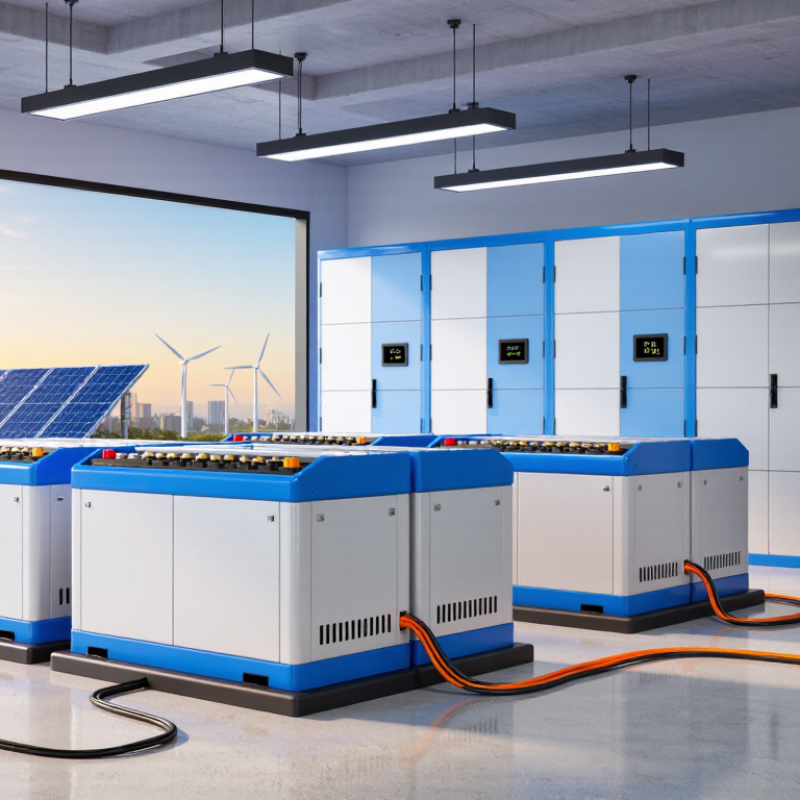
China’s energy storage needs vary by province, grid connection, and operating duty. A coastal industrial site may need short, frequent peak shaving; a renewable project may need longer discharge to shift evening supply. The National Energy Administration reported 73.76 GW of new-type energy storage installed by the end of 2024, with 168 GWh of capacity and an average duration of about 2.3 hours. That national average is context, not a design target. Assess hourly load, renewable output, grid limits, and required backup duration before choosing system size.
Tips: Build a 15-minute load profile from actual meter data. Record peak demand, ramp rates, outage history, and seasonal temperature. Specify usable energy at the point of connection, not just the battery’s nameplate rating. Check power conversion limits, round-trip efficiency, degradation, and auxiliary loads. Measure the load. Then test several dispatch scenarios against local tariffs and grid services.
A paper study can still miss real operating behavior. Dust, cooling demand, and control settings may reduce delivered energy, especially during hot afternoons. Include commissioning tests and ongoing performance checks in the requirements. Revisit assumptions after the first operating season; the original forecast may be wrong. Keep the safety margin tied to measured uncertainty, rather than adding capacity without a clear service need.
| Tip | What to Assess | Useful Data and Calculation | System Requirement or Action |
|---|---|---|---|
| 1. Build a site-specific load profile | Identify when and how demand changes at the grid connection point, including seasonal and weekday/weekend differences. | Use interval data at 15-minute resolution or finer where available. Record peak demand (kW or MW), energy use (kWh or MWh), and ramp rates. | Use at least one full year of representative data where possible; check for missing intervals, unusual operating periods, and planned load growth. |
| 2. Define the job the storage system must perform | Separate objectives such as renewable-energy shifting, peak reduction, backup, frequency response, or grid congestion relief. | For each service, specify required power (MW), duration (hours), response time, operating window, and expected events per year. | Rank services and check whether their schedules conflict. Do not count the same battery capacity as fully available for simultaneous services. |
| 3. Size power and energy separately | Estimate the largest required charge/discharge rate and the energy needed to sustain it. | Power is measured in MW; energy is measured in MWh. A 10 MW system delivering full power for 2 hours requires 20 MWh of deliverable energy. | Select inverter power and battery energy capacity to meet the required operating profile, while respecting connection limits and auxiliary loads. |
| 4. Account for usable capacity and aging | Distinguish installed energy from energy that can be delivered at the point of connection over the system’s life. | A planning estimate is: required nominal energy = required delivered energy ÷ (usable state-of-charge fraction × discharge efficiency × end-of-life capacity fraction). | Use project-specific battery limits, temperature conditions, degradation assumptions, and warranty terms. Treat any illustrative operating window as technology- and project-dependent. |
| 5. Measure round-trip efficiency at a clear boundary | Compare energy discharged with energy charged, and clarify whether the measurement is at the battery, inverter, or grid connection point. | Round-trip efficiency (%) = energy discharged ÷ energy charged × 100. Include conversion losses and, for a whole-system assessment, auxiliary consumption. | Set a guaranteed test method and operating conditions before procurement; compare systems only when measurement boundaries and conditions match. |
| 6. Match dispatch to renewable output and local prices | Assess local wind or solar generation, grid constraints, applicable time-of-use tariffs, and market participation rules. | Use time-stamped generation, load, curtailment, and price data. Model charge/discharge schedules and include round-trip losses and operating limits. | Validate revenue and savings assumptions against the project’s location and current rules; tariffs and market arrangements vary by province and can change. |
| 7. Check grid connection and power quality | Confirm the connection point’s import/export capacity, voltage conditions, protection requirements, and permitted operating modes. | Review transformer and feeder ratings, short-circuit levels, reactive-power needs, ramp limits, and harmonic performance requirements. | Complete the required grid studies and obtain connection approval before finalizing equipment ratings or dispatch assumptions. |
| 8. Design for site conditions and thermal management | Evaluate ambient temperature, humidity, dust, flooding, corrosion, altitude, noise limits, and available land or building space. | Use local weather records and site surveys. Assess temperature control, ventilation or cooling demand, drainage, access, and equipment derating. | Specify operating environmental limits and maintainability requirements; include HVAC and other auxiliary loads in performance calculations. |
| 9. Integrate safety, fire protection, and emergency response | Assess battery technology, installation layout, thermal-event risks, detection and suppression strategy, and emergency access. | Review applicable Chinese codes and standards for the project type, along with equipment certifications, hazard analyses, separation distances, and emergency procedures. | Develop safety measures with qualified designers and local authorities. Requirements depend on project configuration, site, and applicable regulations. |
| 10. Set measurable performance and maintenance targets | Define how performance, degradation, downtime, and operating events will be tracked throughout the asset life. | Track available power and energy, round-trip efficiency, response time, state-of-charge accuracy, equivalent cycles, alarms, and availability. | Agree baseline tests, data retention, maintenance intervals, acceptance criteria, and corrective actions in the operating and service plan. |
Note: Values and operating targets should be confirmed using project-specific load, grid, climate, safety, and regulatory studies. They are not universal requirements.
Start with the job, not a headline efficiency number. Compare discharge time, cycling frequency, site conditions, maintenance access, and lifetime cost.
Lithium-ion systems can respond quickly and handle frequent, shorter cycles. Flow batteries, thermal storage, and pumped hydropower may suit longer discharge periods when conditions allow. Fit matters.
One common benchmark is the ability to supply power for 10 or more hours. Treat it as a useful reference, not a universal purchasing rule.
Use measured hourly load data. Check temperature, grid limits, and expected cycling. A cold-storage warehouse with evening peaks has different needs from a data center requiring steady backup.
No. A system with lower efficiency may still cost less over its lifetime if it lasts longer or needs fewer replacements. The comparison is not always tidy.
Keep cells within the system’s specified operating range. Log rack temperatures during hot afternoons and cold starts. Small differences between racks matter.
Keep ventilation paths clear, inspect electrical connections, and test alarms and shutdown procedures on a documented schedule. Track capacity and temperature monthly. A dashboard alone is not a maintenance plan.
Not necessarily. Avoid leaving batteries fully charged or deeply discharged for long periods unless the system requires it. I still find this easy to overlook. No checklist prevents every failure, so review whether alarms and emergency procedures work in practice.
Improving energy storage performance in China begins with a clear assessment of local energy needs, site conditions, grid requirements, and expected operating patterns. These factors help determine the right storage capacity, power rating, and technology for each application. A well-matched system can store energy when it is available and deliver it when demand rises, while avoiding unnecessary cycling and inefficient operation.
To understand how to improve energy storage performance over time, operators should coordinate charging and discharging with energy management goals, maintain suitable operating temperatures, and use safeguards to reduce risks and limit battery degradation. Regular monitoring can reveal changes in efficiency, capacity, or system behavior before they become larger problems. Routine inspections and timely maintenance help keep equipment reliable, extend its useful life, and support consistent performance as energy needs evolve.

 Volt Power