5 Best Lithium Battery Certifications for Global Buyers?

Time:2026-09-23 Author:Charlotte
0%

Buying lithium batteries across borders requires more than comparing capacity, cycle life, and price. A shipment may contain cylindrical cells, pouch cells, or complete battery packs. Each format can face different testing, transport, and market-entry requirements. So, what certifications should lithium batteries have before you approve a supplier?

This guide examines five widely recognized certifications and compliance frameworks for global buyers. UN 38.3 is essential for air and sea transportation, while IEC 62133-2 supports safety evaluation for portable lithium cells and batteries. Depending on the destination, buyers may also need UL certification, CE-related compliance, PSE, KC, or other regional approvals. The correct choice depends on chemistry, voltage, battery design, intended use, and sales market.

Look beyond a certificate logo. Ask for the complete test report, certificate number, product model, laboratory details, and manufacturing-site information. Check whether the tested battery matches the shipment in front of you. A report for one cell design may not cover a redesigned pack with a different protection board. That mistake happens.

No list is perfect.

Experienced importers also review labels, safety data sheets, transport documents, traceability records, and quality-control procedures. Independent laboratories and accredited certification bodies provide stronger evidence than supplier screenshots. This overview will help global buyers compare certification value, identify common documentation gaps, and make safer purchasing decisions without assuming one approval works everywhere. Requirements can change, so confirm current rules with the relevant authority before shipping or selling.
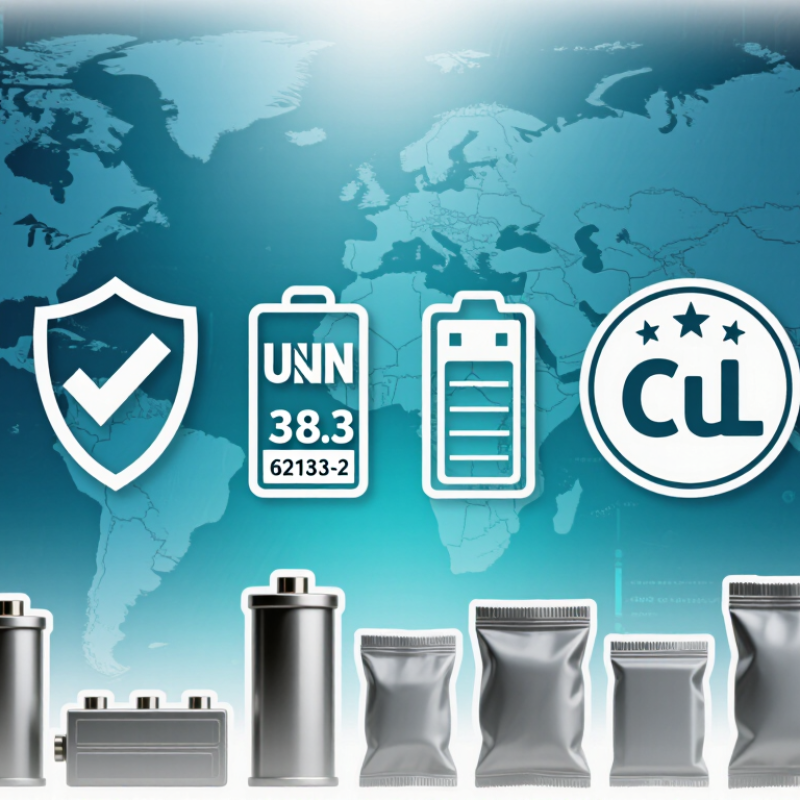
5 Best Lithium Battery Certifications for Global Buyers?

What Lithium Battery Certifications Mean for Global Buyers

What Lithium Battery Certifications Mean for Global Buyers

Lithium battery certifications are not simple quality badges. Each one answers a different risk question. UN 38.3 confirms that a battery design passed transport safety tests, including vibration, shock, and external short circuit tests. It supports safer shipping by air, sea, road, or rail. However, it does not prove long-term performance.

IEC 62133-2 focuses on rechargeable battery safety during normal use and foreseeable misuse. UL 1642 commonly addresses lithium cells, while UL 2054 covers battery packs and household applications. CE marking shows conformity with relevant European requirements, but it is not always an independent laboratory certificate. Buyers should check the exact model, chemistry, rated capacity, and certification scope.

Details matter. A certificate for one cell cannot automatically cover a finished battery pack. Ask for current test reports, production-site information, and matching model numbers. Compare the label with the documents. Small differences can signal a serious mismatch. Safety data sheets and transport test summaries also help logistics teams prepare accurate shipments.

In supplier reviews, I would request samples from the same production line. Certification alone cannot reveal weak welding, unstable software, or poor storage practices. Some documents may be genuine but outdated. That is easy to overlook. Buyers should also verify whether changes in capacity, casing, or protection circuitry require renewed testing. No certificate replaces technical judgment.

UN 38.3: The Core Transport Safety Certification

UN 38.3: The Core Transport Safety Certification

Global battery demand is expanding quickly. The International Energy Agency reported that electric vehicle battery demand exceeded 750 GWh in 2023, rising about 40% year on year. More batteries now cross borders by air, sea, road, and rail. UN 38.3 testing helps prove that lithium cells and batteries can tolerate normal transport stress. Tests include altitude simulation, thermal cycling, vibration, shock, external short circuit, impact, overcharge, and forced discharge. However, UN 38.3 is technically a transport safety test, not a complete product certification. That distinction is often missed.

A credible compliance file should include the laboratory report, test summary, battery specifications, and production consistency records. The test summary identifies the tested cell or battery design, test results, and responsible manufacturer. One small design change can matter. A new enclosure, chemistry adjustment, or capacity increase may require engineering review and retesting. A passed report is not a magic passport. In warehouse inspections, missing model references can create delays, even when the battery itself is safe.

Tips: Match every shipment label to the exact tested model. Check watt-hours, packaging instructions, and state of charge before dispatch. Keep documents accessible to freight teams, not only engineers. Ask the testing laboratory whether modifications affect the original results. IEA data shows the market is moving faster than many internal approval systems. That gap deserves attention.

5 Best Lithium Battery Certifications for Global Buyers? - UN 38.3: The Core Transport Safety Certification

Certification / Standard Primary Purpose Applicable Battery Types Key Test Areas Transport or Market Relevance Typical Compliance Evidence
UN 38.3 Verifies that lithium cells and batteries can withstand normal hazards during transportation. Rechargeable and non-rechargeable lithium cells and batteries, including batteries packed with or contained in equipment. Altitude simulation, thermal test, vibration, shock, external short circuit, impact or crush, and overcharge testing where applicable. Core requirement for international air, sea, road, and rail transport of lithium batteries. A compliant test summary is generally required for transport documentation. UN 38.3 test report and test summary identifying the cell or battery design, test laboratory, test results, and applicable revision.
IEC 62133-2 Assesses the safety of portable sealed secondary lithium cells and batteries under intended use and reasonably foreseeable misuse. Rechargeable lithium-ion cells and battery packs used in portable electronic equipment. Electrical abuse, mechanical abuse, thermal safety, component protection, abnormal charging, and cell or pack construction. Widely referenced for portable products in international supply chains, especially consumer electronics and handheld equipment. Accredited laboratory test report, battery specifications, construction review, and evidence of compliance with the applicable edition.
IEC 62619 Addresses safety requirements for industrial lithium secondary cells and batteries used in stationary or mobile industrial applications. Rechargeable lithium batteries for energy storage systems, motive equipment, industrial tools, robotics, and other industrial applications. Overcharge, external short circuit, forced discharge, thermal abuse, mechanical integrity, propagation-related safety, and control-system functions. Useful for demonstrating industrial battery safety in international projects, although additional national or sector-specific requirements may apply. Product safety test report, battery management system information, protection-system assessment, and technical construction documentation.
UL 1642 Evaluates the safety of lithium cells and battery assemblies against electrical, mechanical, and thermal hazards. Lithium primary cells and rechargeable lithium-ion cells or battery assemblies used in products and equipment. Short circuit, abnormal charging, forced discharge, crush, impact, heating, overcharge, and enclosure-related safety tests. Frequently requested for lithium cells and battery packs intended for products sold or evaluated in North American markets. Certification record or laboratory report, construction file, critical component list, production-control records, and follow-up inspection evidence where applicable.
UL 2054 Covers safety requirements for household and commercial battery packs, including their protective systems and enclosures. Battery packs and rechargeable battery systems used in household, commercial, portable, and related equipment. Abnormal charging, short circuit, overcharge, forced discharge, temperature exposure, drop, mold stress, and enclosure safety. Commonly used as a battery-pack safety benchmark for products entering North American commercial and consumer channels. Product certification or test report, wiring and protection diagrams, critical component documentation, production inspection records, and labeling review.

Note: UN 38.3 is a transport safety testing requirement rather than a general product certification. The applicable standard edition, national regulations, transport mode, battery chemistry, configuration, and end-use application should be confirmed before shipment or market entry.

IEC 62133: Essential Battery Safety for International Markets

5 Best Lithium Battery Certifications for Global Buyers?
IEC 62133: Essential Battery Safety for International Markets

IEC 62133 is a key safety standard for portable lithium secondary cells and batteries. For lithium systems, buyers usually examine IEC 62133-2 test evidence. The standard evaluates hazards such as external short circuits, overcharging, forced discharge, and abnormal operation. These tests imitate harsh moments during charging, transport, or daily use. A qualified laboratory should identify the tested cell, battery pack, protection circuit, and production sample clearly.

Look closely.

A reliable compliance file should include the standard edition, test dates, sample photographs, and laboratory credentials. It should also match the exact product configuration you plan to purchase. Changing the cell supplier, enclosure, wiring, or battery-management circuit may require a new assessment. This detail is often missed. IEC 62133 does not replace UN 38.3 transport testing, electrical regulations, or market-specific requirements. Treat it as one important safety layer, not a universal approval. During supplier reviews, request traceability records and production-control information. Ask how failed samples are handled, too. A polished certificate can still hide weak process discipline. That uncomfortable possibility deserves attention. Experienced buyers compare documents with the physical battery, including labels, connectors, and protective housing. They also verify whether the report covers cells, batteries, or both. Small wording differences can create expensive delays at customs or during product launch.

UL 1642 and UL 2580: Key Certifications for North American Buyers

For North American buyers, UL 1642 and UL 2580 address different battery risks. UL 1642 mainly evaluates lithium cells and batteries used in portable or stationary products. Its testing can include external short circuit, crush, impact, heating, and abnormal charging. These tests expose weak separators, poor insulation, and unstable thermal behavior. A cell-level certificate does not automatically validate a complete battery pack.

UL 2580 focuses on batteries used in electric vehicles and similar mobility systems. It examines the pack, enclosure, electrical connections, cooling design, and battery management system. Testing may include vibration, mechanical shock, overcharge, short circuit, and thermal abuse. During procurement, buyers should request the exact certificate, test report, covered model numbers, chemistry, pack voltage, and manufacturing location. Small differences matter. A certificate for one 96-cell configuration may not cover a redesigned 108-cell pack.

In supplier reviews, a common mistake is treating certification as permanent proof of safety. It is not. Confirm the applicable standard edition and ask whether production controls match the tested sample. Also check transport testing, installation requirements, and local approval rules, because UL 1642 or UL 2580 alone may not satisfy every project. Documentation can look complete while omitting a changed enclosure, software version, or cooling path. That gap deserves careful questioning. Testing should reflect real use, not only a clean laboratory sample.

5 Key Lithium Battery Certifications for Global Buyers

This comparison highlights the primary application scope of five widely referenced lithium battery safety standards. A value of 1 indicates that the standard directly addresses the category; it does not represent certification quality, test results, or market approval.

Buyer guidance: UN 38.3 is relevant to the transport of lithium cells and batteries. IEC 62133-2 focuses on portable rechargeable lithium batteries, UL 1642 addresses lithium cells and batteries, UL 2580 covers electric vehicle batteries, and IEC 62619 applies to industrial lithium secondary batteries.

CE, RoHS, and Regional Compliance for Global Battery Sales

5 Best Lithium Battery Certifications for Global Buyers?

CE, RoHS, UN 38.3, IEC 62133-2, and regional approvals shape international battery sales. CE confirms conformity with applicable European safety, health, and environmental rules. It is usually a manufacturer’s declaration, not a government-issued quality badge. RoHS controls restricted substances, including lead, mercury, and cadmium. The EU Battery Regulation adds stronger traceability and sustainability duties. Requirements are moving targets.

UN 38.3 testing supports safe lithium battery transport by air, sea, road, and rail. IEC 62133-2 evaluates portable battery safety, including overcharge, vibration, and short-circuit risks. Regional rules still matter. Buyers may need UKCA, Japan’s PSE, South Korea’s KC, or other market-specific evidence. The International Energy Agency reported that global electric car sales exceeded 17 million in 2024. That growth increases pressure for credible battery documentation, not just attractive datasheets. One certificate rarely covers every market.

Tips: Request the test report, certificate scope, cell model, production site, and revision date. Check whether the report matches the exact battery pack. A similar-looking pack may use different cells or protection software. Ask for transport test summaries before shipment. The United Nations Manual of Tests and Criteria remains the practical reference for UN 38.3. Certificates can expire, and paperwork can contain errors. Treat compliance as a process, not a single purchase document.

FAQS

What does UN 38.3 certification confirm?

It confirms that a battery design passed transport safety tests. These may include vibration, shock, and external short circuits. It supports air, sea, road, and rail shipping. It does not prove long-term battery performance.

Does IEC 62133-2 cover normal battery use?

Yes. It evaluates rechargeable battery safety during normal use and foreseeable misuse. Testing may examine overcharging, vibration, and short circuits. It cannot replace careful production inspection.

What is the difference between cell and pack certification?

Cell certification covers an individual cell. Pack certification covers the finished battery assembly. A certificate for one cell does not automatically cover a complete pack.

What documents should buyers request?

Request current test reports, certification scope, model numbers, chemistry, capacity, and production-site details. Also ask for safety data sheets and transport summaries. Compare every label carefully.

Does CE marking prove independent laboratory testing?

Not always. CE marking generally shows conformity with applicable regional requirements. It may rely on a manufacturer’s declaration. Buyers should check the supporting evidence and exact product scope.

Are certificates permanent proof of battery safety?

No. Certificates may become outdated after changes to capacity, casing, software, or protection circuits. It is not permanent. Request the latest revision date.

Do regional approvals cover every international market?

No. Different markets may require different compliance evidence. A battery might need European, British, Japanese, Korean, or other regional approvals. One certificate rarely covers everything.

How can buyers verify that documents match the supplied battery?

Compare the certificate with the exact model, cell type, voltage, capacity, and manufacturing location. Inspect samples from the same production line. A similar-looking pack can hide different cells or software.

Can certification reveal weak welding or poor storage?

Not reliably. Laboratory testing may not expose every production weakness. Buyers should inspect welding, cooling paths, software controls, and storage conditions. I might still miss something without production samples.

What is the biggest mistake during battery procurement?

Treating attractive paperwork as complete safety evidence. Certification matters, but technical judgment remains necessary. A rushed review can miss one changed component.

Conclusion

For global buyers, understanding battery certifications is essential for evaluating safety, transport readiness, and market access. The question “what certifications should lithium batteries have” depends on the battery type, intended application, destination, and shipping method. UN 38.3 is the core requirement for demonstrating that lithium batteries have passed transport safety tests, while IEC 62133 addresses battery safety for many international consumer and industrial applications.

For North American markets, UL 1642 is commonly associated with rechargeable lithium cells and batteries, while UL 2580 focuses on batteries used in electric vehicles and similar systems. In Europe and other regions, CE and RoHS compliance may support market entry by addressing product conformity, environmental restrictions, and responsible material use. Buyers should review test reports, certification scope, battery configuration, and regional requirements rather than relying on a single certificate.

Charlotte

Charlotte

Charlotte is a seasoned marketing professional with a deep understanding of the company's portfolio and a passion for elevating its presence in the market. With a keen eye for detail and a commitment to excellence, she ensures that our professional blog is regularly updated with insightful articles......