Why Should Businesses Invest in Battery Storage Systems?

Time:2026-10-13 Author:Amelia
0%

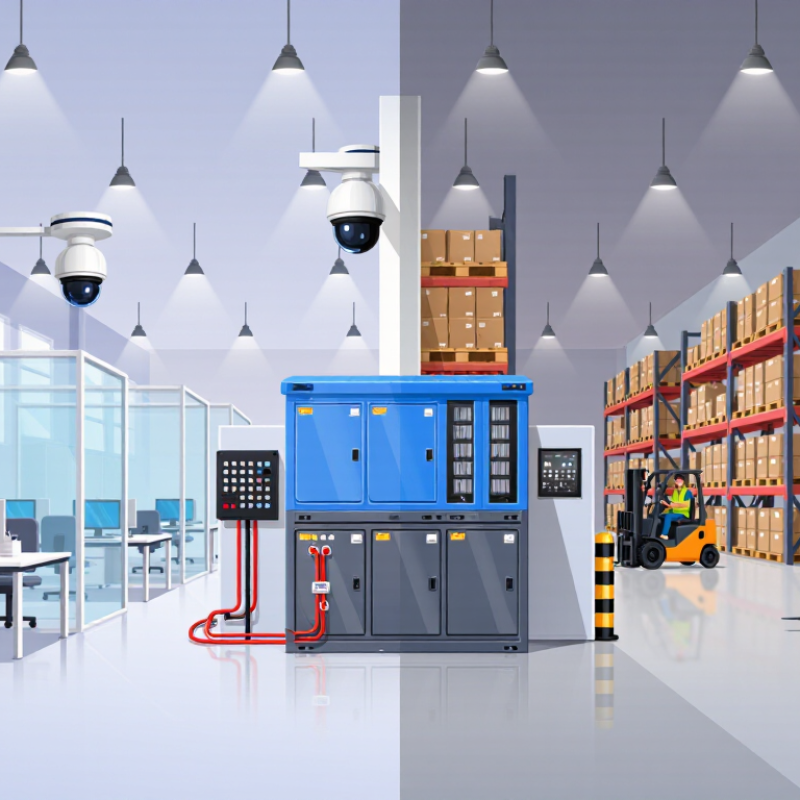
Battery storage is becoming a practical business investment, not merely a technology trend. A well-designed system can store electricity during lower-cost periods and discharge it during expensive peak hours. It can also support operations during short outages, protect sensitive equipment, and reduce dependence on unstable grid conditions. For a warehouse, this might mean keeping refrigeration controls active when power briefly fails. For an office, it may keep servers, lighting, and security systems running.

The financial case requires careful analysis. Businesses should examine electricity tariffs, demand charges, outage history, available space, fire protection, maintenance needs, and equipment warranties. The key question is not simply “how large should the battery be?” It is “what should businesses know before investing in battery systems” and how does that knowledge fit their actual operations? Experienced energy consultants can compare load data with storage performance, while qualified installers can assess ventilation, controls, and safe access. Independent advice matters because projected savings may appear attractive but depend on usage patterns and future energy prices.

Some assumptions will be wrong. That is normal. A battery may not deliver its expected payback if production schedules change, export rules evolve, or degradation occurs faster than expected. Businesses should request transparent financial models, realistic performance guarantees, and documented safety procedures. The strongest investment decisions combine technical evidence with operational experience. Storage is not automatically the right answer for every company, but disciplined evaluation can reveal where it creates measurable resilience, cost control, and long-term value.
Why Should Businesses Invest in Battery Storage Systems?

What Battery Storage Systems Are and How They Work

Why Should Businesses Invest in Battery Storage Systems?

Battery storage systems store electrical energy for later use. They usually combine battery cells, a battery management system, an inverter, and safety controls. The inverter changes direct current into alternating current for business equipment. It can also reverse the process during charging. The management system monitors temperature, voltage, and charge levels. It stores energy.

During low-demand periods, the system charges from the grid or onsite renewable generation. When electricity prices rise, it discharges power to selected loads. This process can reduce peak demand and support operations during short outages. The system does not create energy. It shifts energy through time. That timing matters. Battery capacity, power rating, response speed, and round-trip efficiency affect real performance. Battery cells also degrade gradually, especially under high temperatures and frequent deep cycling.

Tips: Start with measured electricity data, not assumptions. Review at least twelve months of interval consumption records. Identify peak loads, outage risks, and available installation space. Ask qualified engineers to check ventilation, fire protection, electrical capacity, and local requirements. A larger battery is not automatically better. Oversizing can increase costs while leaving useful capacity idle. I have seen planning models overlook maintenance access and replacement schedules. That mistake can make a technically sound system difficult to operate. Build a lifecycle budget that includes monitoring, inspections, efficiency losses, and future battery replacement.

Why Businesses Need Reliable and Flexible Energy Supply

Why Should Businesses Invest in Battery Storage Systems?

Why Businesses Need Reliable and Flexible Energy Supply

A reliable energy supply keeps production lines, refrigeration units, and digital systems running during grid interruptions. Battery storage systems can respond within milliseconds when the grid becomes unstable. Power matters. That gap hurts. They also store electricity during lower-cost periods and release it during expensive demand peaks. This flexibility can reduce demand charges and protect operating budgets.

A properly designed system starts with the business’s actual load profile, not a generic capacity estimate. Engineers should examine peak loads, outage history, critical equipment, and expected growth. The battery must support essential operations without creating unsafe thermal or electrical conditions. Modern control systems can prioritize emergency circuits, adjust charging schedules, and coordinate with on-site renewable generation. These details require qualified installation and routine maintenance.

Storage is not a perfect solution. Batteries gradually lose capacity, and project returns depend on tariffs, usage patterns, and local regulations. Reality is messier. Businesses should review degradation assumptions, round-trip efficiency, fire protection, warranty terms, and end-of-life handling. A smaller system may provide better value than an oversized one. Careful monitoring also reveals whether the battery performs as planned, or whether early assumptions need revising. Reliability comes from sound design, tested procedures, and people who understand the facility’s daily energy demands.

How Battery Storage Reduces Commercial Electricity Costs

Why Should Businesses Invest in Battery Storage Systems?

Commercial electricity bills often rise because of short, intense demand spikes. A fifteen-minute HVAC surge can influence charges for an entire billing period. The U.S. Department of Energy reports that demand charges may represent 30% to 70% of commercial electricity bills. Battery storage can discharge during these peaks, reducing the facility’s measured demand. The result is practical: fewer expensive spikes, especially in warehouses, offices, and refrigerated sites.

Timing matters. Batteries can charge when electricity prices are lower and discharge during expensive periods. They can also store midday solar power for evening operations. The International Energy Agency reported that global battery storage additions reached nearly 42 gigawatts in 2023, almost doubling from the previous year. That growth reflects stronger grid needs, but it also shows improving commercial confidence in flexible energy assets.

Savings are not automatic. Tariffs, battery efficiency, software controls, and equipment degradation affect the final return. A battery that is poorly sized may save less than expected. It may even create new costs. Businesses should review at least twelve months of interval data before purchasing equipment. The analysis should include demand charges, time-of-use rates, backup requirements, and maintenance. The U.S. National Renewable Energy Laboratory emphasizes that storage value depends heavily on operating conditions and local electricity prices. Real-world performance can be messier than a spreadsheet.

Why Should Businesses Invest in Battery Storage Systems?

Battery storage can reduce commercial electricity costs by storing energy during lower-price periods and discharging it during peak-price hours. It can also reduce demand charges by limiting short-term power spikes.

The chart presents a transparent modeled commercial electricity scenario in USD, using a time-of-use tariff, a recurring monthly load profile, and a battery system that shifts energy away from peak periods. Results vary by tariff, facility load, battery size, and operating schedule.

Operational, Environmental, and Resilience Benefits for Businesses

Why Should Businesses Invest in Battery Storage Systems?

Battery storage systems can improve daily operations by storing electricity during lower-cost periods. Businesses can then use that energy during peak demand. This may reduce demand charges and protect production schedules from short interruptions.

In a warehouse, stored power can keep refrigeration, sensors, and security equipment running. In an office, it can support servers, lighting, and communication systems.

The results depend on accurate load data, suitable equipment, and regular maintenance. A poorly sized system can disappoint.

Environmental benefits also come from using more renewable electricity. Batteries can store surplus solar power instead of allowing it to go unused. This helps reduce reliance on carbon-intensive grid power during busy hours.

However, storage is not automatically green. Manufacturing, transport, replacement cycles, and recycling all affect its environmental impact. Businesses should request documented performance data and choose systems with clear end-of-life procedures.

Resilience is another practical benefit. During outages, batteries can support critical circuits, but they cannot power every operation indefinitely. That limitation deserves honest planning.

Tips

  • Start with twelve months of electricity bills and interval load data.
  • Identify critical equipment before choosing capacity.
  • Test backup procedures with staff, not just technicians.
  • Review ventilation, fire protection, monitoring, and maintenance requirements.
  • Leave room for mistakes. Energy patterns change as operations grow, and yesterday’s ideal system may need adjustment.

Key Factors in Choosing and Implementing a Battery Storage System

Choosing a battery storage system starts with the building’s actual load, not a brochure. Review twelve months of utility bills, fifteen-minute demand data, and planned equipment changes. A warehouse may need four hours of discharge, while a clinic may value shorter backup events. Measure twice. Define the purpose clearly: peak shaving, solar capture, outage support, or a combination.

Capacity is only one decision. Compare usable energy, power rating, round-trip efficiency, degradation, response time, and operating temperature. Ask how performance changes after ten years, not only on commissioning day. The installation needs clearances, ventilation, fire detection, controlled access, and approved electrical connections. Local codes and utility requirements can delay a promising project. Have a qualified engineer verify drawings, protection settings, and emergency procedures before procurement.

Implementation also depends on software and people. The energy management platform should expose live data, alarms, state of charge, and dispatch rules. Test these functions with real operating scenarios, including a failed sensor or communications outage. Review warranty limits, service response times, replacement planning, and cybersecurity controls in plain language. Financial models should include demand charges, maintenance, degradation, financing, and downtime risks. Our assumptions are rarely perfect. A staged installation or monitored pilot can reveal unexpected thermal behavior and less obvious savings before expansion.

Why Should Businesses Invest in Battery Storage Systems? - Key Factors in Choosing and Implementing a Battery Storage System

Evaluation Dimension Typical Business Requirement or Data Range Why It Matters Implementation Considerations
Primary Application Peak shaving, backup power, renewable-energy integration, demand response, or energy arbitrage The application determines the required power rating, energy capacity, controls, and financial model. Define the main use case first, then identify whether the system will provide one service or several services.
Power Rating Measured in kilowatts (kW) or megawatts (MW); commonly sized to the facility’s peak load or critical-load demand Power rating determines how much load the battery can support at one time. Use interval utility data, motor-starting requirements, and critical-load assessments rather than monthly consumption alone.
Energy Capacity Measured in kilowatt-hours (kWh) or megawatt-hours (MWh); commonly calculated as power × required discharge duration Energy capacity determines how long the system can discharge at a specified output. Include usable capacity, reserve capacity, temperature effects, and degradation over the project life.
Discharge Duration Approximately 1–4 hours for many commercial applications; longer durations may be selected for extended backup or renewable shifting Duration affects equipment size, cost, resilience, and the suitability of the system for different applications. Match duration to the load profile, outage target, tariff structure, and renewable-generation pattern.
Round-Trip Efficiency Often approximately 80%–95% for modern battery energy-storage systems, depending on configuration and operating conditions Higher efficiency reduces electricity losses and improves the economics of energy shifting. Request both battery-level and system-level efficiency figures, including inverter, transformer, cooling, and standby losses.
Battery Chemistry Lithium iron phosphate is widely used for stationary storage; other lithium-ion and flow-battery technologies may suit specific applications Chemistry influences safety characteristics, energy density, cycle life, cost, and operating temperature range. Evaluate the complete system, including enclosure design, thermal management, fire protection, monitoring, and service requirements.
Cycle Life Commonly specified from several thousand cycles upward, depending on chemistry, depth of discharge, temperature, and operating profile Cycle life affects replacement timing, lifetime cost, and the number of services the system can provide. Review cycle-life test conditions and the guaranteed end-of-warranty capacity, not only the maximum advertised cycle count.
Depth of Discharge The usable percentage of installed capacity; the permitted range varies by system design and warranty A higher usable depth of discharge can increase available energy but may influence degradation and warranty conditions. Compare usable kWh with nameplate kWh and confirm the operating limits in the warranty documentation.
Response Time Milliseconds to seconds for many battery systems, depending on the inverter and control architecture Fast response supports power-quality management, frequency regulation, and rapid backup transitions. Verify whether the stated response time applies to the battery, inverter, controller, or fully integrated system.
Backup and Resilience Backup duration should be based on critical loads, outage history, generator coordination, and business continuity requirements Battery storage can maintain essential operations and reduce downtime during short-duration interruptions. Separate critical and noncritical circuits, define automatic transfer requirements, and confirm islanding capability where required.
Demand-Charge Reduction Potential savings depend on the tariff, monthly demand peaks, load shape, and battery dispatch accuracy Reducing short, high-demand peaks can lower electricity bills in markets with demand-based charges. Analyze at least 12 months of interval data and account for battery recharge energy and future tariff changes.
Renewable-Energy Integration Storage can shift solar or wind generation to later periods and reduce renewable-energy curtailment The system increases the ability to use on-site renewable electricity when generation and demand do not coincide. Coordinate battery capacity with renewable output, interconnection limits, export rules, and forecast accuracy.
Safety and Compliance Requirements may include electrical, fire, building, environmental, and grid-interconnection standards applicable to the project location Compliance reduces safety risks, approval delays, insurance issues, and operational liabilities. Engage qualified electrical and fire-safety professionals and confirm local permitting requirements before procurement.
Thermal Management Operating temperature, humidity, ventilation, and cooling requirements vary by system design and site conditions Temperature control supports performance, service life, and safe operation. Consider ambient conditions, HVAC energy consumption, noise limits, weather protection, and available space.
Total Cost of Ownership Include equipment, installation, interconnection, software, permits, insurance, maintenance, electricity losses, and eventual replacement Purchase price alone does not represent the long-term financial commitment. Compare lifecycle cost, expected savings, incentives, financing, degradation, and residual value using consistent assumptions.
Control and Energy Management Real-time monitoring, automated dispatch, state-of-charge management, alarms, reporting, and utility communication may be required Effective controls determine whether the battery consistently delivers its intended financial and operational benefits. Check compatibility with meters, solar inverters, building-management systems, generators, and cybersecurity policies.
Warranty and Performance Guarantees Review warranty term, retained capacity, throughput, availability, response time, exclusions, and service response commitments Clear guarantees help manage degradation risk and protect expected project performance. Ensure the contract defines measurement methods, remedies, maintenance responsibilities, and replacement procedures.
Scalability Modular systems can allow future increases in power or energy capacity, subject to site and interconnection limits Scalability helps businesses respond to load growth, new tariffs, and additional renewable generation. Reserve physical space, electrical capacity, communications infrastructure, and permitting flexibility for future expansion.

Note: The figures shown are general industry ranges or evaluation guidelines. Actual performance, cost, capacity, safety requirements, and financial returns depend on site conditions, local regulations, utility tariffs, system design, and operating strategy.

FAQS

What does a battery storage system do?

It stores electricity for later use. A battery shifts energy through time. It does not create new energy.

How does the system work?

Battery cells store direct current electricity. An inverter changes it for business equipment. A management system monitors voltage, temperature, and charge levels.

Can battery storage reduce electricity costs?

It may reduce peak demand charges. The system charges during cheaper periods and discharges during expensive periods. Savings depend on accurate usage data.

What business equipment can batteries support?

Batteries can support refrigeration, servers, lighting, sensors, and communication systems. Critical loads come first. They cannot power everything indefinitely.

How should a business choose battery capacity?

Start with twelve months of bills and fifteen-minute demand records. Identify peak loads, outage risks, and critical equipment. A larger battery is not always better.

What installation conditions require attention?

Engineers should review ventilation, clearances, fire detection, electrical capacity, and controlled access. Maintenance space matters. It is often overlooked.

Are battery systems automatically environmentally friendly?

No. Their impact includes manufacturing, transport, efficiency losses, and recycling. Request documented performance data and clear end-of-life procedures.

What should businesses test before full deployment?

Test alarms, dispatch rules, backup procedures, and communications failures. A staged pilot can reveal unexpected heat, weaker savings, or poor operating assumptions.

Conclusion

Battery storage systems capture electricity and store it in batteries for later use, helping businesses manage when and how they consume energy. They can charge during periods of lower electricity prices or strong renewable generation, then discharge during peak-demand hours or unexpected grid interruptions. This flexibility gives businesses a more reliable and controllable energy supply while reducing exposure to price fluctuations and demand charges.

Before investing, businesses should assess what should businesses know before investing in battery systems, including energy usage patterns, storage capacity, power requirements, system lifespan, safety, maintenance, installation conditions, and expected return on investment. A well-planned system can lower operating costs, support renewable energy integration, reduce emissions, and maintain essential operations during outages. Businesses should also consider future energy needs, available incentives, grid connection requirements, and the expertise required for monitoring and managing the system. Careful planning ensures that the selected solution matches both financial objectives and long-term operational goals.

Amelia

Amelia

Amelia is a seasoned marketing professional with a wealth of expertise in our company’s core offerings. With an unwavering passion for driving growth and innovation, she plays a pivotal role in shaping our marketing strategies and enhancing brand visibility. A key aspect of her responsibilities......